
Pool winter maintenance: why your pool doesn't need a break now
A covered pool looks calm and easy to maintain in winter, but this is precisely where the risk lies. If you don’t take specific precautions now, you will end up with cloudy water, algae problems and costly technical repairs in spring. The good news: with a few targeted measures, you can winterize your pool safely and save yourself a lot of effort in spring.
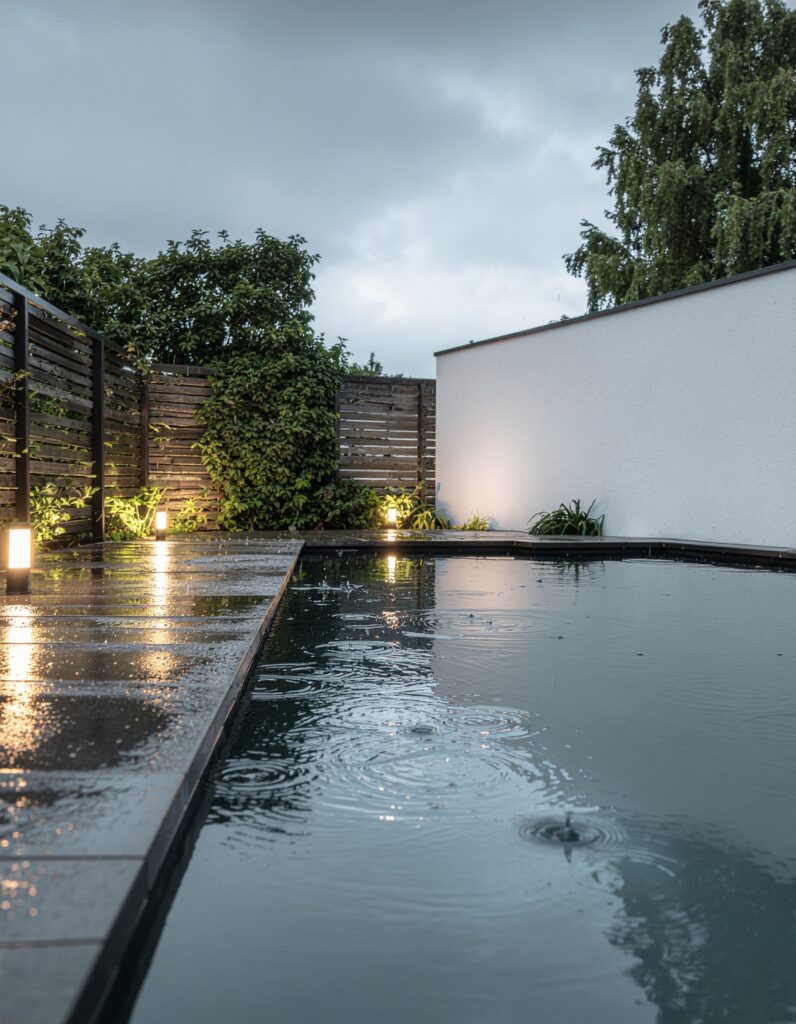
Why winter pool maintenance is crucial
Many pool owners underestimate the cold season. Even when the cover is closed, the pool water can tip over, damage the technology or form stubborn algae deposits. Winter maintenance of your pool is not a permanent job, it just requires a few strategic steps at the right time. If you don’t take specific precautions now and make your pool winter-proof, you’ll start spring with cloudy water, algae problems and costly technical repairs.
These 6 measures protect your pool in winter
1. stabilize water values The pH value should be between 7.0 and 7.4 before the onset of winter. This keeps the water chemically balanced and prevents corrosion or limescale deposits. Also measure the alkalinity and adjust it to 80 to 120 mg/l if necessary.
2. clean the filter thoroughly A clean filter is the basis for stable pool water. Organic residues would ferment for months and cause cloudy, polluted water in spring. Rinse the filter several times and check the filter medium for wear.
3. use winter care products in a targeted manner Special winter care products slow down algae growth, prevent limescale deposits and keep the water stable. The dosage depends on the volume of water and the water hardness of your pool. Typically 300 to 600 ml per 10 cubic meters of water, with harder water requiring more winter product.
4 Adjust the water level correctly Lower the water level about 10 centimetres below the skimmer level. This protects your pool technology and the pool liner from frost damage. The water itself remains in the pool as it protects the pool structure from ground frost and groundwater pressure.
5. secure the pool cover professionally The winter cover should be tight, clean and free from damage. Check regularly whether leaves, dirt or snow have accumulated, especially after storms or heavy snowfall. Depending on the type of cover, you may need to take action in the event of a snow load. Simple pool tarpaulins can usually only withstand low loads, whereas high-quality safety covers can withstand considerably more.
6. use digital pool monitoring Modern pool technology with automatic dosing systems and sensors reports changes directly to your smartphone via an app. This allows you to keep track of things remotely and react in good time.

Your winter care timetable: Step by step
Before the first frost: Start with a complete water analysis and document all values. This baseline will help you to recognize changes in winter. Ideally, you should start in mid to late October, or at the end of September at higher altitudes.
Winterize pool technology: For passive winter storage, remove the filter pump, drain it completely and store it in a frost-proof place. Empty all pipes and close nozzles and skimmers with winter plugs. Only with active winterization with speed-controlled pumps can you reduce the circulation to a minimum to prevent ice formation.
Dosing the winter care product: Add the winter care product according to the manufacturer’s instructions and leave the pump running for another 24 hours so that it is evenly distributed throughout the pool. You can then switch off the filter system.
Regular checks: Check the cover condition, water level and water clarity every month. React immediately to any abnormalities such as cloudy water or damaged cover. Carefully remove large amounts of snow from the cover before the load becomes too great for your type of cover.
Smart Pool Monitoring: If you have digital pool technology, you can use remote monitoring, even when you are on the move or on winter vacation.

Your spring start begins now
If you look after your pool properly in winter, you will save time, money and nerves in spring. The water stays clear, the technology works and you can start the new pool season relaxed while others are still busy repairing damage.
Would you like to have your pool professionally winterized?
The specialist partners in the bluegardens network know the regional particularities and support you with expertise and high-quality technology. Make an appointment now for your individual pool winter maintenance.
How often do I have to check on the pool in winter? A visual inspection once a month is sufficient. Check the cover and water level and readjust if necessary. With Smart Pools, digital monitoring takes over continuous control.
Can I simply empty the pool completely? No, the water in the pool protects the pool structure from frost damage and ground pressure. An empty pool can be lifted by groundwater or crack due to ground frost. The risk is significantly higher than with a winterized pool with water.
What do I do in heavy snowfall? Carefully remove large amounts of snow from the cover before the load becomes too great. The critical snow load depends on the type of cover you have. Simple pool tarpaulins should be relieved of even small amounts of snow, while high-quality safety covers can withstand much more. Use soft brooms or snow scrapers with a rubber lip to avoid damaging the cover.
Does the filter pump have to run in winter? For passive winter storage (standard for most pool owners), the filter pump is completely removed, drained and stored in a frost-proof place. Only with active winterization with special speed-controlled pumps do you run them at minimum output to prevent ice formation. However, this requires a pool heater and only makes sense in regions with mild winters.
How much does winter maintenance for my pool cost? The costs are manageable. A winter maintenance set costs between 30 and 80 euros, depending on the size of the pool. Compared to the possible follow-up costs of algae remediation, water changes or technical repairs in spring, which often amount to several hundred to thousand euros, this is a worthwhile investment.
Does this also apply to heated pools and indoor pools? Heated outdoor pools and indoor pools require adapted care. The water values need to be checked more frequently as use often continues. A bluegarden specialist partner in your region will be happy to advise you on your specific pool situation.