


Terrace planning in winter:
How to make your outdoor space project a success
The terrace is the heart of the garden. This is where family and friends meet, where you can enjoy hours of sunshine and balmy evenings. But a well-planned patio is not created overnight. If you use the winter months for well thought-out planning, you can lay the foundations for an outdoor space project that will give you lasting pleasure.
- Oliver Range
- 8. Dezember 2025
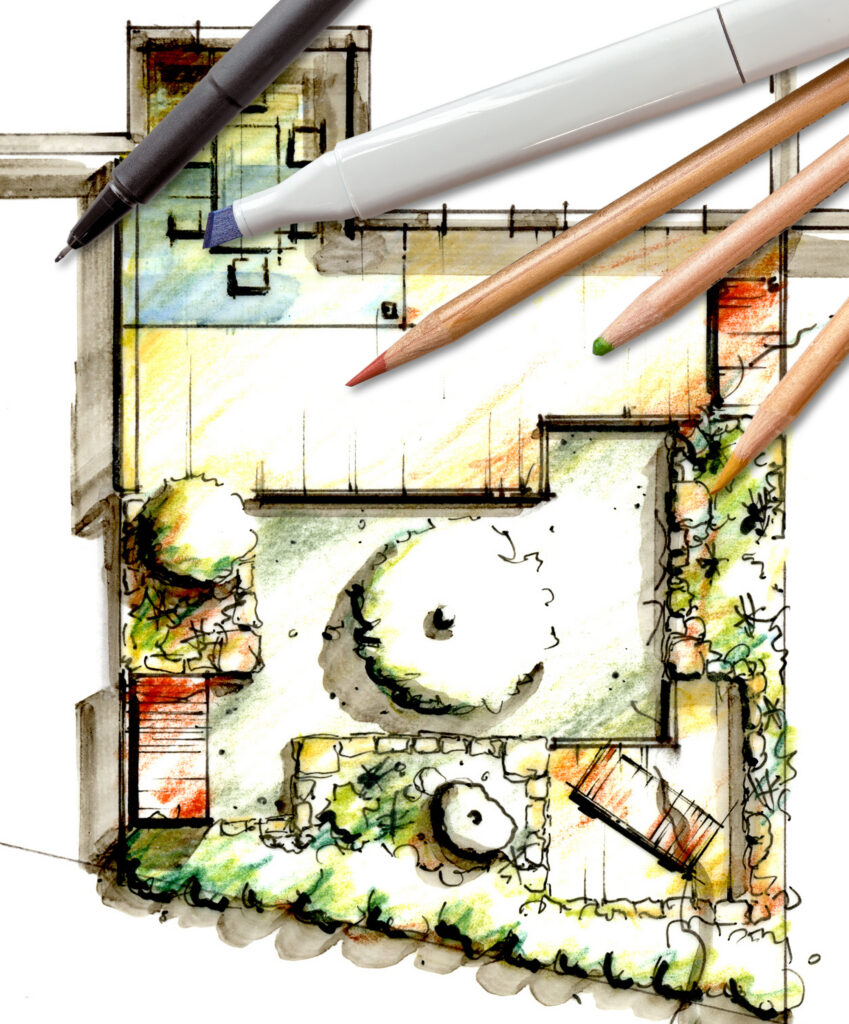
Why winter is the best time to plan
During the winter months, gardening and landscaping companies have more capacity for detailed consultations. Material suppliers can provide samples at their leisure and you have time to compare different options. Professional specialist companies such as Immergrün from Hemer use modern 3D planning tools that allow you to experience your future patio before you even break ground.
Greencord Gartenarchitektur from Berlin also uses the quiet time of year for intensive planning phases. Garden architect Cord von Hodenberg has over 25 years of experience and pursues a clear objective: to create gardens that will last for generations. This long-term perspective begins with well thought-out winter planning.
Team Petrik from Saxony also emphasizes the value of careful planning: the company with over 20 employees offers a complete service from the first plan to the finished terrace and takes time for individual advice.
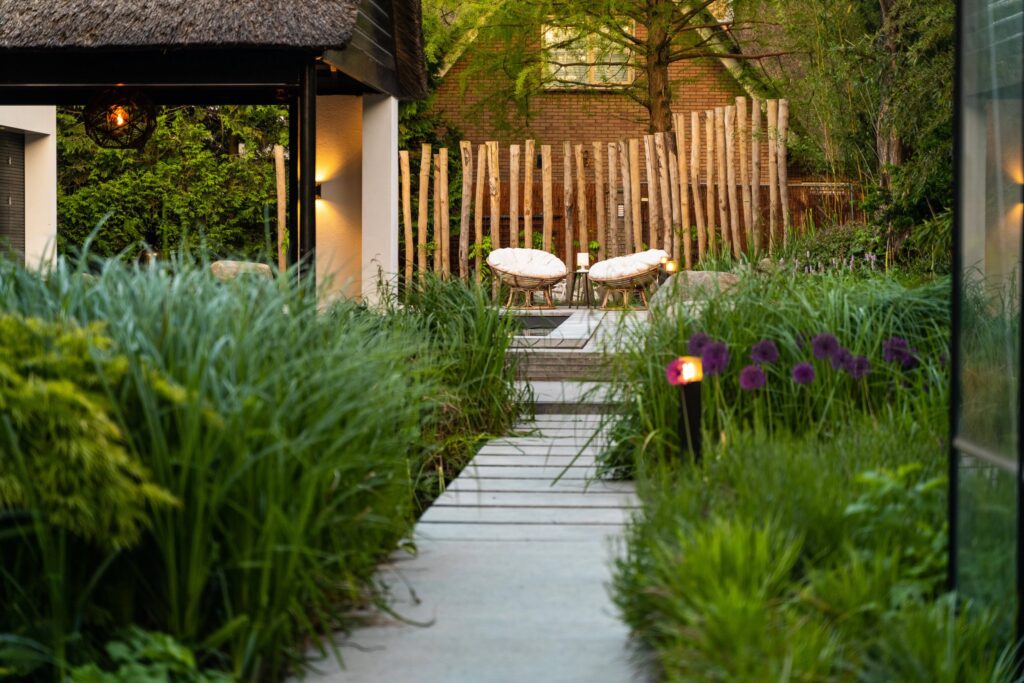
Before you start with the detailed planning, you should carefully analyze your property. The direction of the compass, course of the sun, existing structures and soil conditions all influence the ideal location and design of your patio.
Important analysis points:
- Course of the sun: Where is the sun in the morning, at midday and in the evening? South-facing terraces heat up considerably in summer
- Visual axes: Which areas do you want to emphasize, which do you want to shield?
- Slope and drainage: Where does the rainwater flow to?
- Connections: Where are the electricity, water and sewage connections?
Inventory: Understanding your property
Choice of materials: From natural stone to concrete
The choice of decking influences the look, feel, maintenance and durability. Two material groups dominate high-quality patio design: natural stone and concrete.
Natural stone: timeless elegance
Natural stones such as travertine, sandstone or granite give every patio an unmistakable appearance. Each slab is unique with its own individual grain and coloring. Kindl OHG from Eggenfelden offers a wide range of natural stones and combines the trade with its own horticultural business. The company emphasizes that sandstone slabs heat up less than granite and offer a pleasant barefoot feeling.
Natural stone options:
- Travertine: Mediterranean look, warm colors (Beige, Roma, Silver)
- Sandstone: Sahara, Grey, Red, Rainbow, Teakwood and other variants
- Granite: Robust, easy to clean, ideal for high-traffic areas

Concrete: modern aesthetics and sustainability
High-quality concrete slabs combine a modern look with practical advantages. The Dutch manufacturer Schellevis has been producing concrete elements with a characteristic old Dutch structure for almost 85 years. The company is committed to sustainability: the products are made from 100% natural raw materials and are fully recyclable.
Schellevis has carried the CSC (Concrete Sustainability Council) quality mark since 2022 and has been working with the NL Greenlabel since 2016. The slabs are frost-resistant, resistant to de-icing salt and slip-resistant (R13). Large formats up to 240 x 120 cm enable smooth surfaces with few joints.
Schönreiter Baustoffe is one of the leading specialist dealers for Schellevis products in Bavaria. The family business with over 70 years of experience offers a 3,000 square meter showroom at three locations (Tacherting, Essenbach, Grafing). The specialized Schellevis team advises on all matters relating to patio design and, on request, can put you in touch with qualified gardening and landscaping companies in the region.
Material comparison:
Criterion | Natural stone | Concrete | Wood/WPC |
Longevity | Very high | Very high | Medium to high |
Care | Low | Very low | Regularly |
Sustainability | High (regional) | High (recyclable) | Variable |
Barefoot comfort | Good (sandstone) | Good | Very good |
Functional zones: More than just an area
A well-designed patio is divided into different areas of use. Galabau Ferber GmbH from Dinkelscherben has been developing tailor-made garden concepts for over 30 years and emphasizes that every patio should match your lifestyle and aesthetic ideas.
Typical functional zones:
- Dining area: Sufficient space for table and chairs, ideally covered
- Lounge area: Cozy seating area, sheltered from the wind, with a view of the greenery
- Barbecue area: Fireproof surface, sufficient distance from flammable materials
- Transition to the garden: steps, planting beds or lawns as a connection
Water as a design element
Water enlivens any outdoor area. Whether a natural pool, swimming pond or classic pool: integrating a water element enhances your patio and creates a special place to relax.
Zinsser KG from Uelzen has been combining traditional craftsmanship with modern solutions since 1894. The family business specializes in swimming ponds, natural pools and swimming pools and offers model gardens for inspiration.
Schellevis offers chlorine-resistant pool edges that can be seamlessly integrated into the patio design. This creates a uniform design concept from the pool edge to the seating area.
Professional tip: Plan electricity and water connections right from the start. Subsequent installations are time-consuming and costly. Modern smart home systems for lighting and irrigation require corresponding empty conduits.
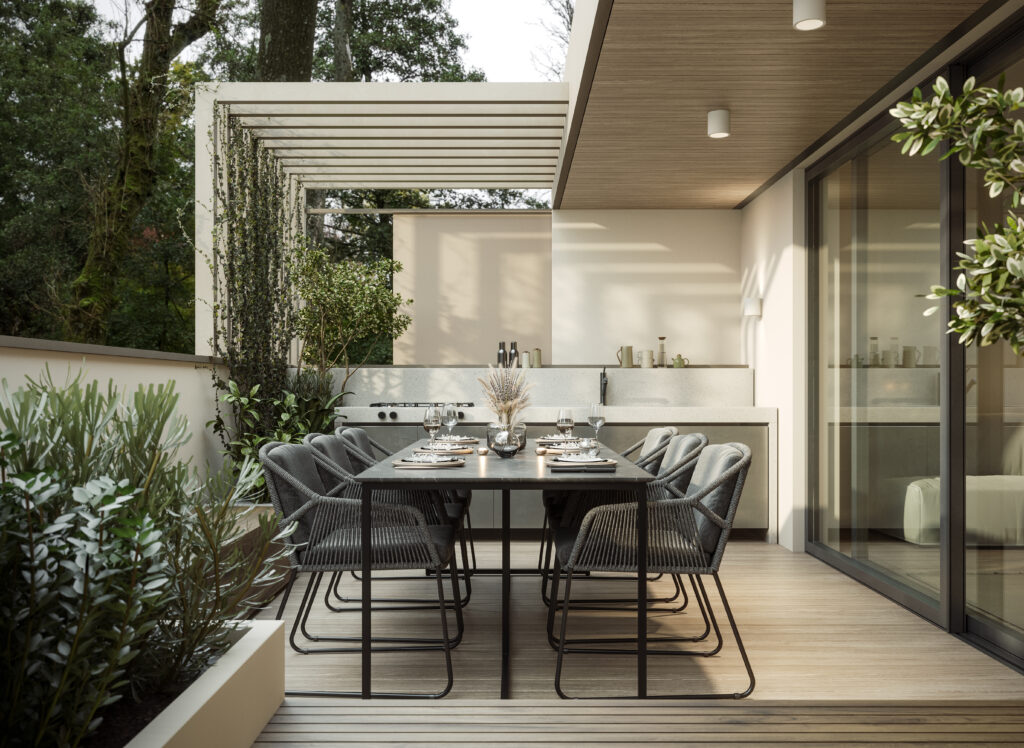
The planning process:
From the initial meeting to implementation
Professional specialist companies guide you through a structured planning process. Immergrün from Hemer, for example, relies on 3D visualizations that allow customers to experience their ideas realistically even before they are implemented.
Typical procedure:
- Initial consultation: Clarify wishes, budget and general conditions
- On-site appointment: Analyze property, take measurements
- Design: Create concept and 3D visualization
- Material samples: Select tiles, stones and accessories
- Offer: Detailed cost calculation with schedule
- Implementation: Professional execution by experienced teams
The winter months are the ideal time to plan your patio. Use the peace and quiet to compare different materials, define functional zones and talk to specialist companies. Whether natural stone from Kindl OHG, sustainable concrete slabs from Schellevis via specialist dealers such as Schönreiter Baustoffe, Berlin garden architecture from Greencord or the expertise of bluegardens partner companies: with the right planning, your patio will become your favorite place in the garden.
When should I start planning my patio?
Ideally in the fall or winter. This gives specialist companies time for detailed advice and you can start implementation straight away in spring.
How much does a new terrace cost?
The costs vary considerably depending on size, material and equipment. A non-binding consultation with a bluegardens specialist company will provide clarity about realistic budgets.
Natural stone or concrete: which is better?
Both materials have their advantages. Natural stone offers individuality and timeless elegance, while concrete scores points for its uniform appearance and easy maintenance. The decision depends on your personal taste and usage requirements.
Do I need planning permission for my patio?
Not in most cases. However, permits may be required for covered terraces, extensions or in certain protected areas. Your specialist company can advise you on the local regulations.
How do I find the right specialist company?
The bluegardens platform provides certified gardening and landscaping companies in your region. Companies such as Immergrün, Galabau Ferber, Zinsser KG, Team Petrik and Greencord Gartenarchitektur stand for quality and personal advice. For materials, we recommend specialist dealers such as Schönreiter Baustoffe in Bavaria.
Can I integrate a pool or natural pool into the patio design?
In fact, we recommend planning the patio and water element together. This creates harmonious transitions and a uniform material concept. Talk to your specialist company about this option at an early stage.


